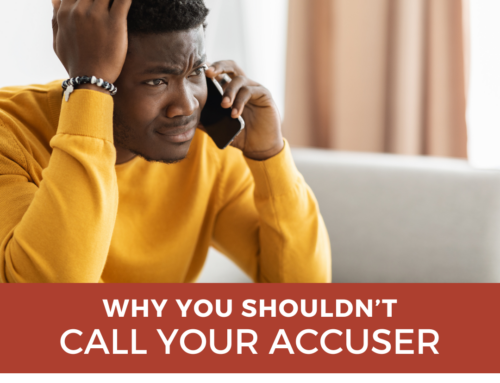


If you’ve been accused of domestic battery, your first instinct may be to “clear things up” with the police or other authorities. You might believe that if you just tell your side of the story, they’ll see you’re innocent. Unfortunately, this is rarely how it works.
Once an accusation has been made, the people questioning you—whether they are police officers, detectives, or prosecutors—are often focused on building a case, not giving you a chance to talk your way out of trouble. Even when you are completely innocent, trying to explain yourself without legal guidance can create statements that are later used against you in court.
While no lawyer can guarantee a specific result, working with one gives you the best possible chance of making sure your words aren’t taken out of context or twisted into “evidence” against you.
Why “Explaining Yourself” Is Risky
Police are trained to gather evidence. Anything you say—no matter how harmless it sounds to you—can become part of the official record. Once it’s written into a police report or captured in an interview recording, that statement may be presented to a judge or jury.
The risks include:
-
Misinterpretation: Statements can be misunderstood or rephrased in ways that make them sound incriminating.
-
Omissions as “Proof”: If you leave out a detail, it may be painted as intentional deception.
-
Inconsistencies: If you recall details differently later (even honestly), prosecutors may claim you’re lying.
This means that your attempt to help yourself could accidentally make the case against you stronger.
The Problem With “Off the Record” Conversations
There’s a common misconception that you can have an informal, off-the-record talk with police. In reality, almost everything you say in the presence of law enforcement can be used in some way. There’s no reliable way to “just talk” without creating a record that might resurface later in court.
Emotional Pressure During Questioning
When someone is accused of domestic battery, questioning often happens in high-stress environments—such as a police station or immediately after an alleged incident.
Under stress, it’s easy to:
-
Misspeak or jumble timelines.
-
Use words that sound more aggressive than you intended.
-
Forget small but important details.
Later, prosecutors can highlight these moments to suggest guilt, even though they’re the natural result of being under intense pressure.
The Illusion of Cooperation
Many people think that staying silent will make them “look guilty,” so they talk to show they have nothing to hide. The truth is, exercising your right to remain silent until you have legal counsel is not an admission of guilt—it’s a constitutional protection.
Cooperating does not have to mean talking. It can mean respectfully declining to answer questions until your attorney is present.
How a Lawyer Changes the Conversation
While no attorney can promise a dismissal or acquittal, they can:
-
Be present during questioning to make sure your rights are respected.
-
Step in if a question is misleading or unfair.
-
Help you decide when and how to provide information.
-
Ensure that statements you do make are complete, accurate, and not easily twisted.
This guidance is about controlling the flow of information so that you don’t unintentionally harm your defense.
How Prosecutors Use Your Words Against You
Even seemingly small comments can be dangerous. For example:
-
Saying, “We were just yelling” could be reframed as “The defendant admitted to a heated confrontation.”
-
Saying, “I don’t remember doing that” could be portrayed as a convenient memory lapse.
-
Saying, “Maybe I bumped into them” could be spun as a partial admission of physical contact.
This is why even casual or hypothetical statements can have major consequences once they’re in the official record.
Written Statements Are Permanent
Sometimes officers will encourage you to “just write down what happened.” These written statements can lock you into a version of events that may not be completely accurate—especially if you later remember more details.
Because they are signed documents, they are often treated as reliable evidence in court, even though they may have been written under stress, confusion, or intimidation.
The Role of Recorded Interviews
Many police interviews are audio or video recorded. Once recorded, your tone, body language, and facial expressions become part of what prosecutors can present to a jury. Something as small as nervous laughter could be framed as a sign of dishonesty or lack of remorse.
What to Do Instead of Explaining Yourself
If you are approached for questioning in a domestic battery case, you have the right to say:
“I want to cooperate, but I will not answer any questions without my lawyer present.”
This simple statement preserves your rights without escalating the situation. It does not make you look guilty—it shows you understand the importance of protecting yourself legally.
For a detailed breakdown of your constitutional rights during questioning, you can review the U.S. Courts’ overview of the Fifth Amendment.
The Long-Term Impact of Early Statements
What you say in the first hours or days after an arrest can follow you through every stage of the case. It can influence:
-
Whether charges are formally filed.
-
What evidence prosecutors choose to highlight.
-
Plea negotiations.
-
How a jury views your credibility.
An early misstep in what you say can take months—or even years—to undo.
Final Thoughts
Trying to explain yourself without a lawyer can feel like the “right” thing to do in the moment, but it’s one of the most common mistakes people make after being accused of domestic battery. Once words are on the record, they’re hard to take back—and they can be used in ways you never intended.
A lawyer cannot promise to win your case, but they can give you the best possible chance of ensuring that your story is told accurately, fairly, and without unnecessary risk. Protecting your future starts with protecting your words.
Do You Need to Talk to an Attorney About Domestic Battery Defense?
If you need to talk to a domestic battery defense attorney in Illinois, we’re here to help. Call us at 847-920-4540 now – we’ll be happy to give you a free consultation and talk to you about your options.