

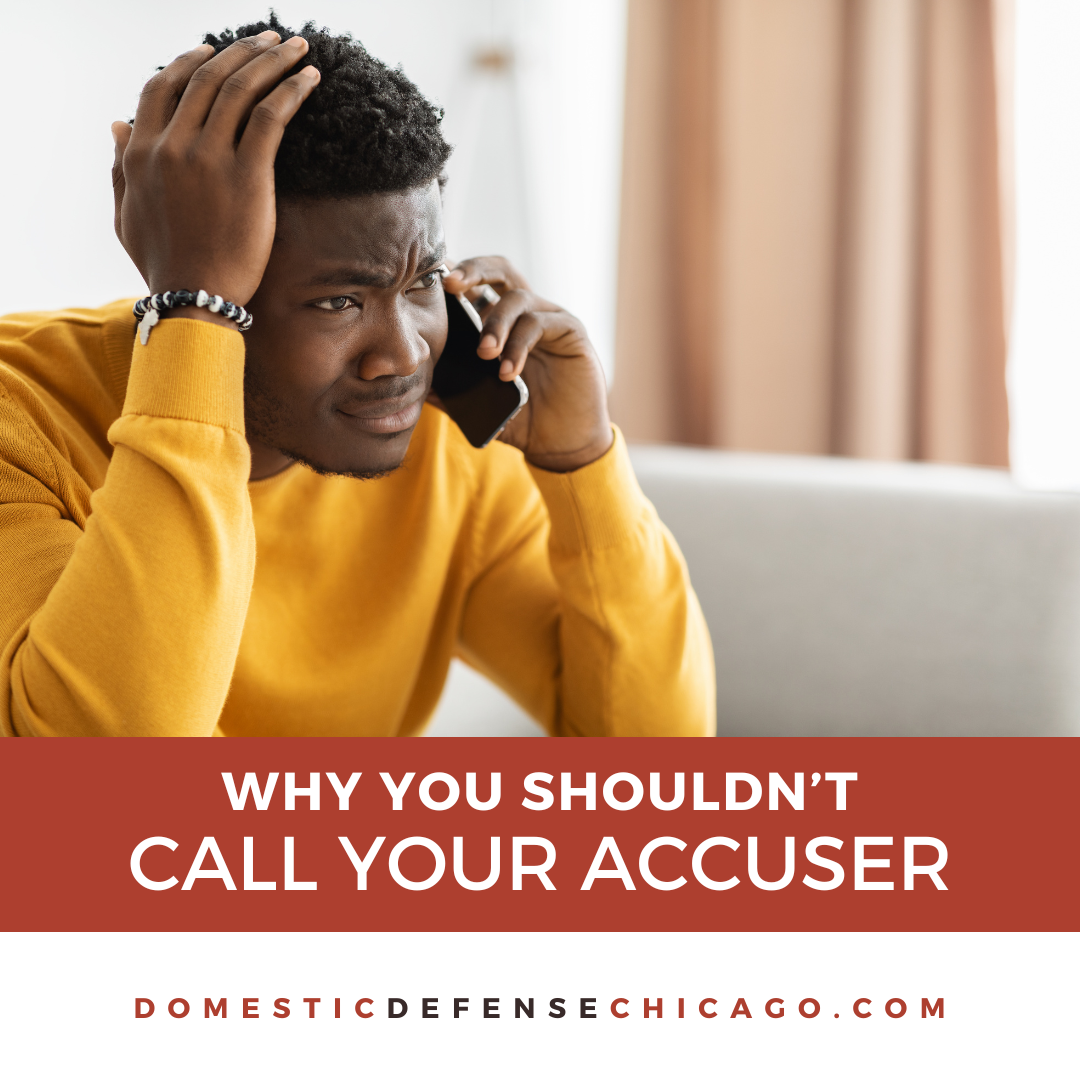
If you’ve been arrested for domestic battery, you might feel the urge to reach out to the accuser—whether to apologize, clear up misunderstandings, or ask them to drop the charges. While this may seem like a reasonable way to smooth things over, it can seriously damage your case and even lead to new criminal charges.
Even if the contact feels harmless or is initiated with good intentions, the legal consequences can be severe. No lawyer can guarantee a particular outcome, but working with one before you take any action gives you the best possible chance of avoiding costly mistakes.
Why Contact Is So Dangerous
After an arrest, there are often strict legal restrictions on contacting the accuser, especially if an order of protection, restraining order, or no-contact order is in place. Violating these orders—intentionally or not—can result in additional criminal charges that are completely separate from your domestic battery case.
Even without a formal court order, contacting the accuser can:
-
Provide the prosecution with new evidence to use against you.
-
Be interpreted as witness intimidation, harassment, or obstruction of justice.
-
Trigger changes to bail or bond conditions.
In short, contact can escalate your legal situation rather than resolve it.
No-Contact Orders: What They Really Mean
A no-contact order is more than just a suggestion—it’s a binding court order. It usually prohibits any direct or indirect communication with the accuser. That means:
-
No phone calls, texts, or DMs.
-
No sending messages through friends, family, or social media.
-
No in-person visits, even in public places.
Violating a no-contact order can lead to immediate arrest, increased bail, and new misdemeanor or felony charges depending on the jurisdiction.
For more on protective orders and their enforcement, you can review the U.S. Department of Justice’s resources on restraining orders.
Indirect Contact Still Counts
Some people believe they can work around a no-contact order by having a mutual friend or family member pass along messages. This is usually prohibited and is treated as indirect contact under the law. Courts may view this as an intentional violation, and the penalties can be just as serious as direct contact.
How Innocent Conversations Get Twisted
Even if you and the accuser both agree to talk, anything you say can be taken out of context and introduced as evidence. A simple statement like, “I’m sorry for everything” could be reframed in court as an admission of guilt.
Similarly, discussing the details of the incident—even casually—can create new inconsistencies in your statements, which prosecutors may use to challenge your credibility.
When the Accuser Wants to Talk to You
Sometimes the accuser is the one who initiates contact. They might want to reconcile, clear up misunderstandings, or even express regret over making the accusation. While it’s tempting to respond, doing so can still violate legal restrictions and harm your defense.
Even if the accuser assures you they won’t report the contact, they cannot control how police or prosecutors respond if the conversation becomes known.
The Risk of Accusations During Contact
Contact after an arrest can also lead to new allegations. For example:
-
The accuser might claim you threatened them.
-
A misunderstanding could be interpreted as intimidation.
-
A third party might witness the contact and make assumptions.
Even without hard evidence, these new allegations can complicate your existing case and weaken your position in court.
Bail and Bond Conditions
Many bail or bond agreements specifically forbid contact with the accuser. Violating these conditions can result in:
-
Bail being revoked and you being taken back into custody.
-
Higher bail amounts.
-
Stricter release conditions.
A single message or unplanned encounter can undo weeks or months of progress in your case.
How a Lawyer Helps Manage Communication
While no attorney can promise to make the charges disappear, they can:
-
Review the terms of any no-contact or protective orders.
-
Advise you on what types of communication are legally allowed.
-
Arrange lawful, documented communication when necessary—such as for child custody or property exchanges.
-
Act as a buffer between you and the accuser to prevent unintentional violations.
This ensures that if communication is absolutely necessary, it’s done in a way that protects you legally.
Exceptions for Shared Responsibilities
In some situations—like co-parenting or shared housing—complete no-contact may be unrealistic. Courts may issue exceptions allowing communication for specific purposes, often with strict guidelines.
Even in these cases, every interaction should be brief, focused, and ideally documented. This helps avoid misunderstandings and provides proof of compliance with court orders.
Social Media Pitfalls
“Contact” doesn’t just mean face-to-face or phone conversations. It can also include:
-
Liking or commenting on posts.
-
Tagging the accuser in photos.
-
Posting content that could be interpreted as directed at them.
Courts have treated social media interactions as violations, even when the accused believed they were harmless.
Accidental Encounters
If you and the accuser live or work near each other, accidental run-ins can happen. If they do:
-
Remove yourself from the situation immediately.
-
Avoid speaking to the accuser.
-
Document the encounter for your lawyer.
Quick, proactive action can help demonstrate that you did not intentionally violate court orders.
Final Thoughts
Contacting your accuser after a domestic battery arrest—whether intentional or not—can have serious legal consequences. It can lead to new charges, damage your credibility, and complicate your defense.
A lawyer cannot guarantee that avoiding contact will win your case, but they can ensure you have the best possible strategy for protecting your rights and staying compliant with court orders.
Before taking any action, especially in emotionally charged situations, talk to an attorney who can guide you on the safest and most effective way forward.
Do You Need to Talk to an Attorney About Domestic Battery Defense?
If you need to talk to a domestic battery defense attorney in Illinois, we’re here to help. Call us at 847-920-4540 now – we’ll be happy to give you a free consultation and talk to you about your options.







Leave A Comment
You must be logged in to post a comment.